
Examples from real home inspections
What I found, why it mattered and what needed attention.
By Eaton Bates · Texas Professional Inspector, TREC #26867
A home inspection can uncover a repair you would not notice during a showing. These examples from my inspections explain what was wrong and what it meant for the buyer.
A dryer vent blocked by the roof itself
While inspecting a roof, I noticed a screen over the dryer vent outlet. Dryer exhaust carries lint, and a screen can catch that lint and restrict airflow. That made this outlet worth a closer look.
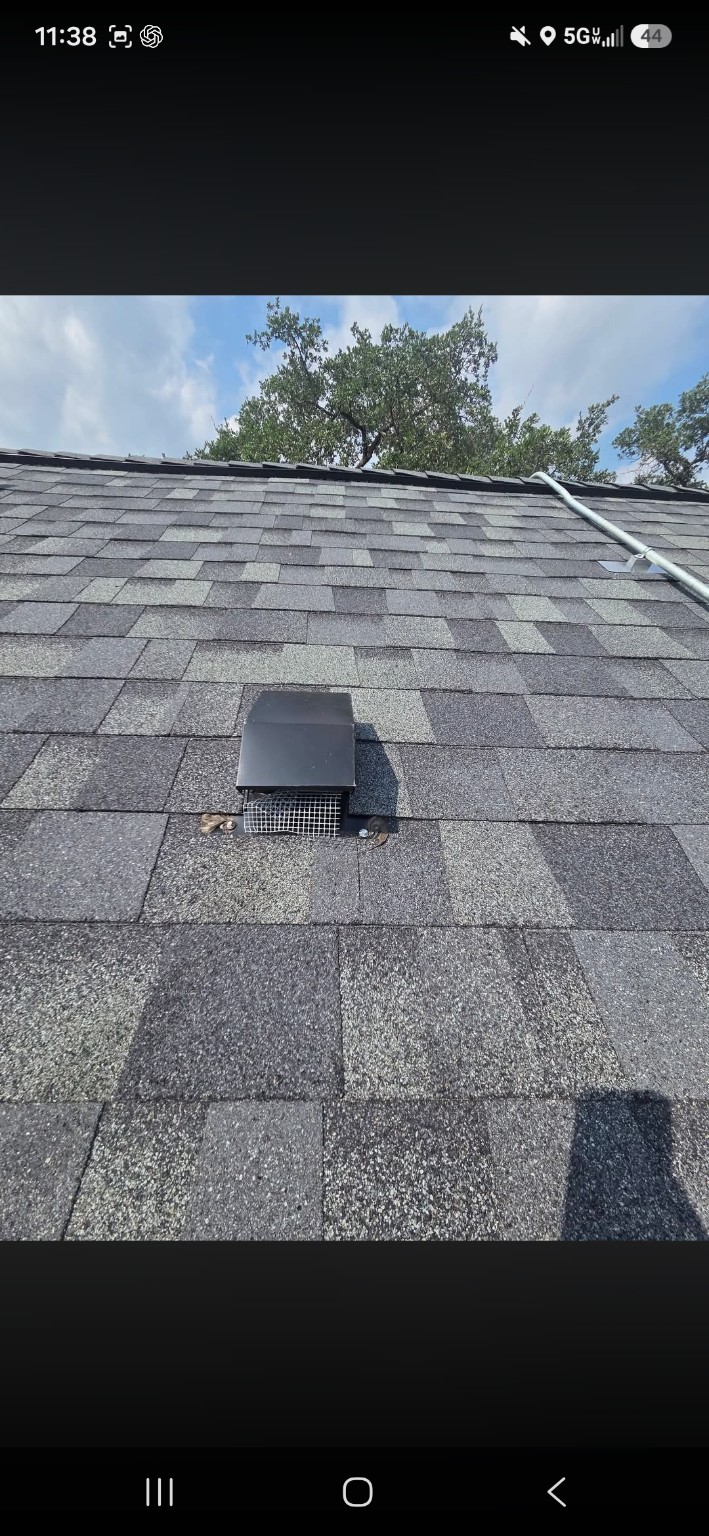
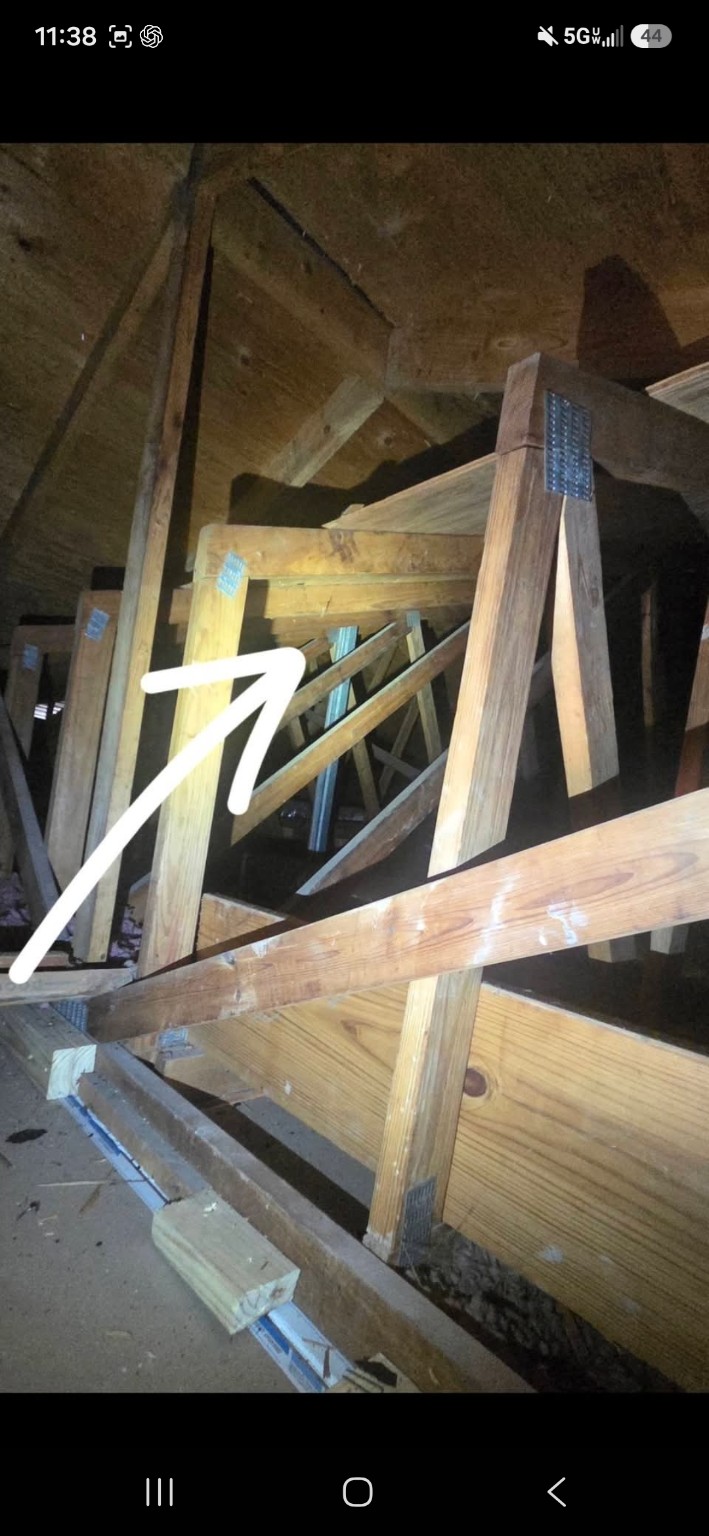
I moved the screen and opened the damper. Behind it, the wood roof decking had never been cut through. I checked from the attic and confirmed the obstruction. The dryer was exhausting into a closed cavity instead of outside.
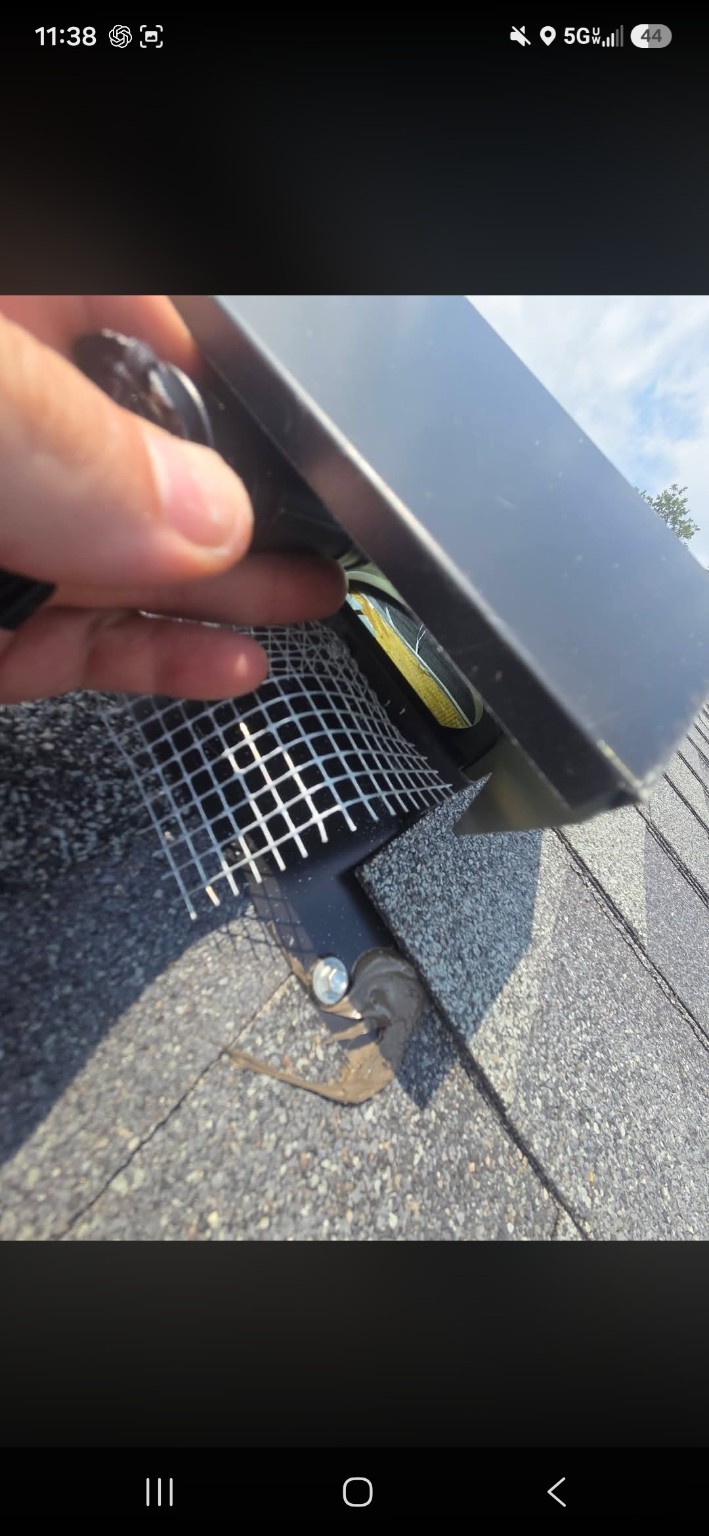
Removing the screen alone would not solve this. The blocked opening also needed correction so the dryer could exhaust outside properly. Restricted exhaust can cause overheating and create a fire concern.
This finding came from a Leander home inspection. See my Leander home inspection guide for included services, pricing and availability.
For background, see PNNL’s explanation of dryer vent screens and airflow.
Bathroom moisture upstairs and active leaking below
I found moisture beneath an upstairs toilet and at the nearby bathroom wall. The report documented a toilet leak and moisture at the wall near the shower.
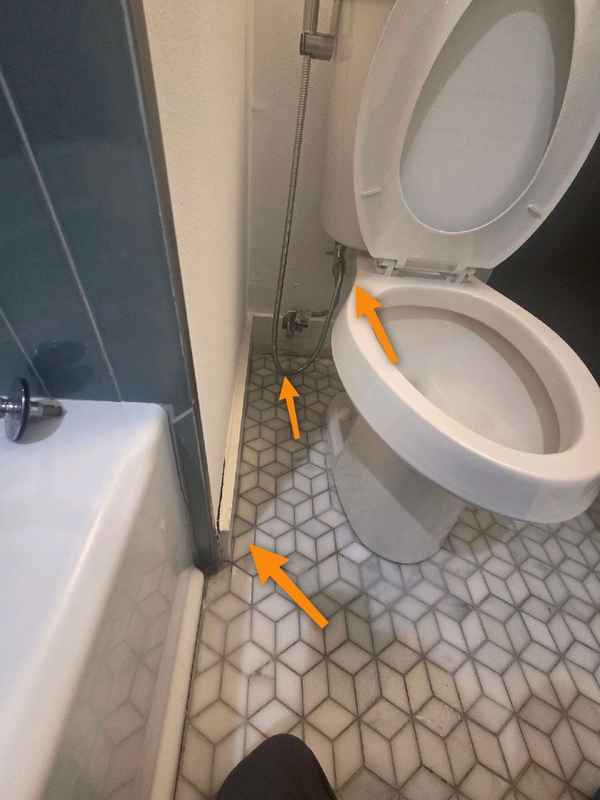
In the bathroom below, water was actively dripping from the ceiling and wall while plumbing fixtures upstairs were running. Paint was bubbling, and moisture-meter testing confirmed elevated moisture in the affected area.
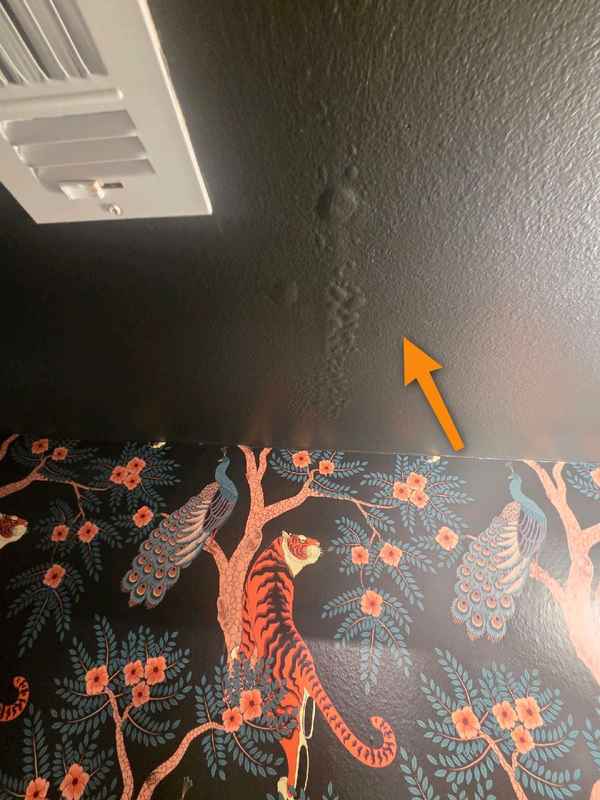
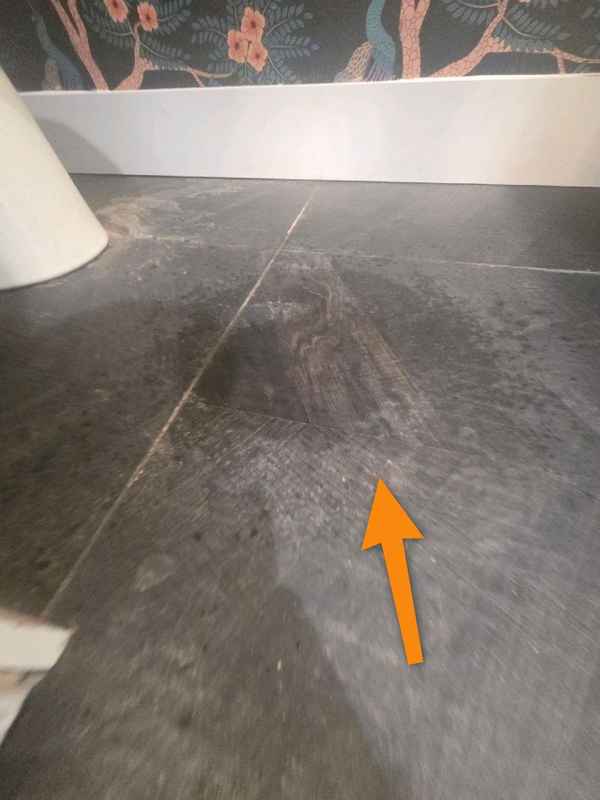
This was an active leak affecting both levels. I recommended that a plumber locate and repair the source, followed by evaluation and repair of the wet building materials.
Cut roof trusses in the attic
During the attic inspection, I found cut roof trusses. These are structural components, so I documented the alterations and recommended evaluation by a structural engineer.
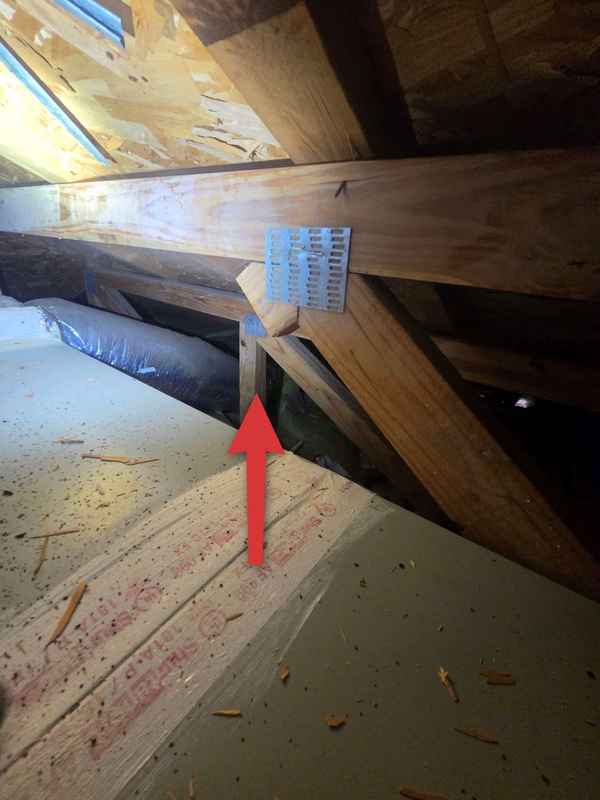
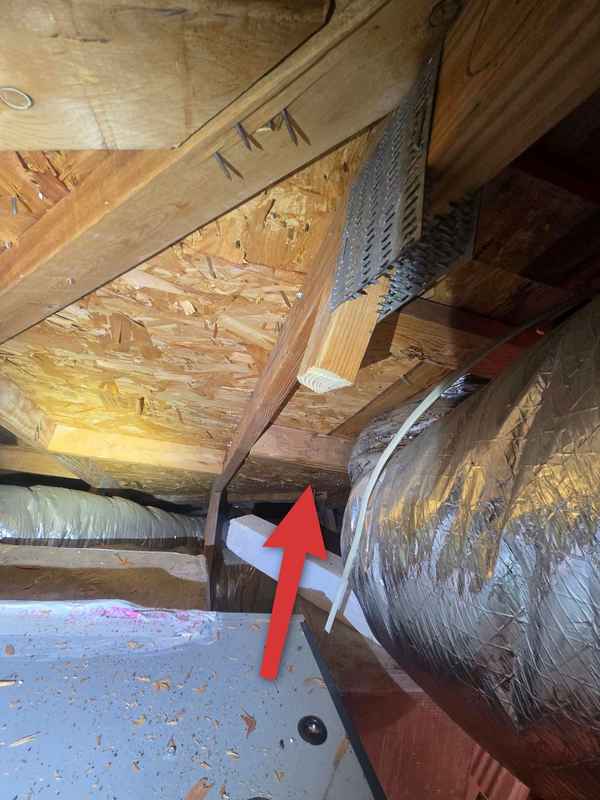
The report called for engineering documentation for the alterations or evaluation by a structural engineer if that documentation was unavailable. An engineer later designed a substantial repair, and I returned to review the completed work.
Buying in Cedar Park? See my Cedar Park home inspections for pricing, included services and availability.
Cracks, sticking doors and uneven floors
Cracking, doors or windows that do not operate properly, and flooring problems can warrant a closer foundation evaluation. In homes with these conditions, I have used ZIPLEVEL measurements to document differences in floor elevation.
The readings add measurements to the visible observations. They show relative elevations at the time of the inspection, but do not establish by themselves what caused the differences or whether movement is ongoing.
I consider the measurements together with the cracking, openings and floor conditions. When the combined evidence warrants it, I recommend a structural engineer evaluate the foundation. See what foundation elevation measurements include.
Roots inside a sewer line
The sewer-camera image below shows roots extending into a sewer line. This is a view from inside the pipe, where a normal visual home inspection cannot see.
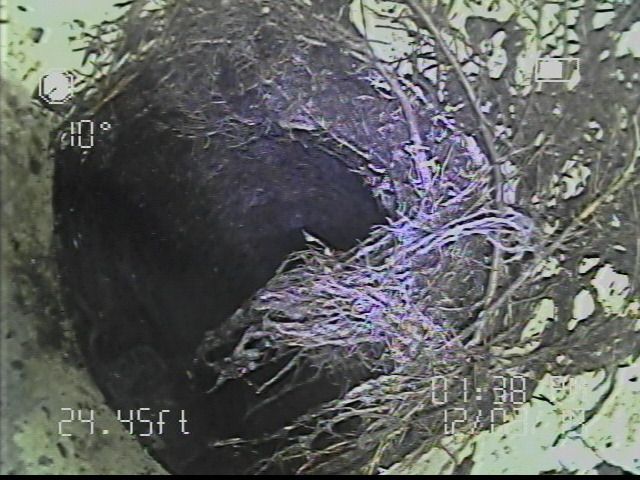
Roots can restrict the space available for wastewater to flow. A plumber can evaluate the affected section and recommend the appropriate repair. A camera image documents the visible condition; it does not establish a repair price.
A sewer scope includes the full narrated video, relevant still images and written findings, with any access limitations explained.
Watch a finding from an inspection
Running the Water Revealed This Hidden Leak →
A short video from Eaton Bates, Austin Real Estate Inspections.
Photos that help you find the issue
This separate sample-report example shows damage to a garage wall finish. The close-up shows the condition; the wider photo and arrow show where to find it. It was classified as a minor concern in this report.
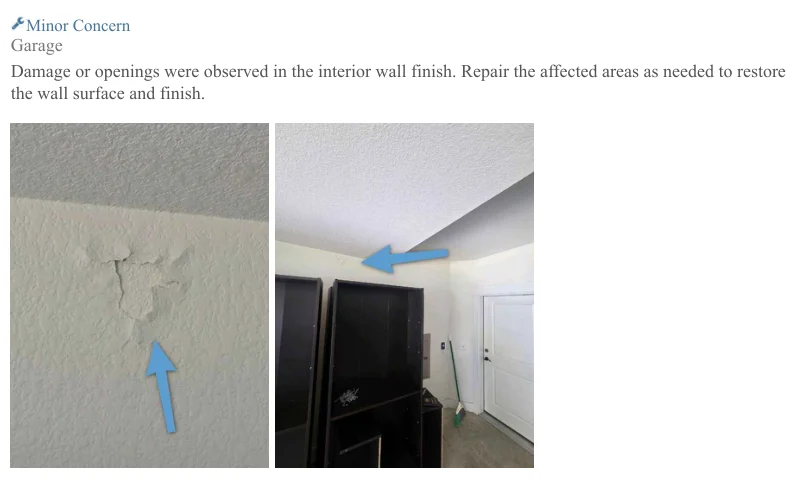
Explore the full sample reports to see how findings, locations and recommended next steps are presented.
Through the inspector’s eyes
What would you notice?
Take a closer look at three real inspection photos. Open each observation to see what the image shows, why it matters and what comes next.
01 · Beneath the sink
What is missing here?
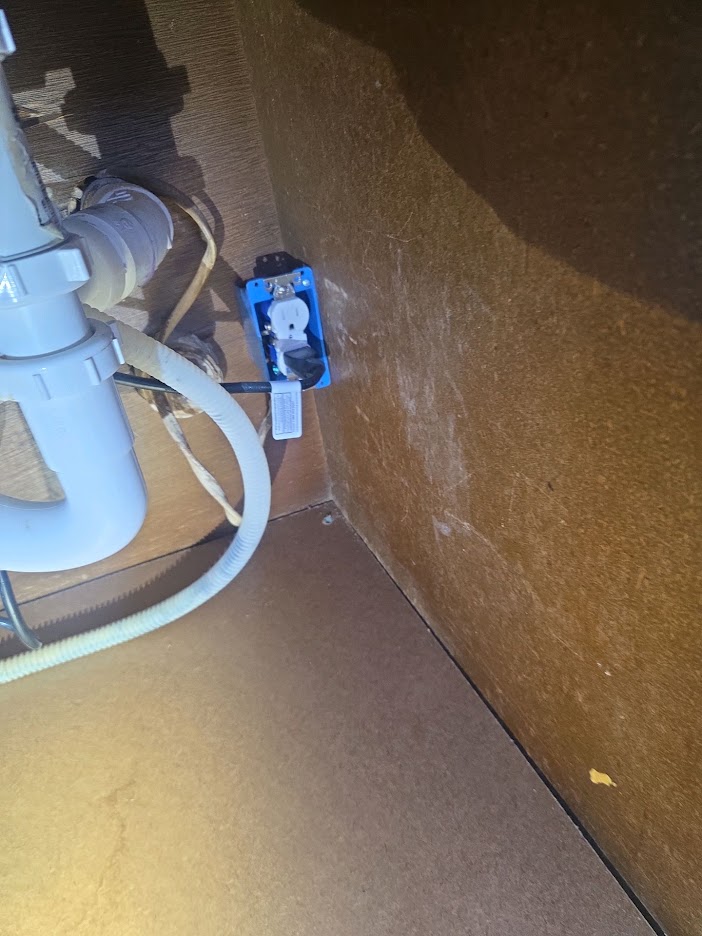
Reveal the under-sink observation
What the photo shows: The receptacle is missing its cover plate. The opening around the outlet leaves parts of the electrical box exposed.
Why it matters: A cabinet door can hide small details worth documenting. This condition calls for a properly fitted cover and evaluation of the installation by a qualified electrician.
The next step: Address the electrical condition before treating the cabinet as ordinary storage space.
02 · Checking water temperature
What is being measured?
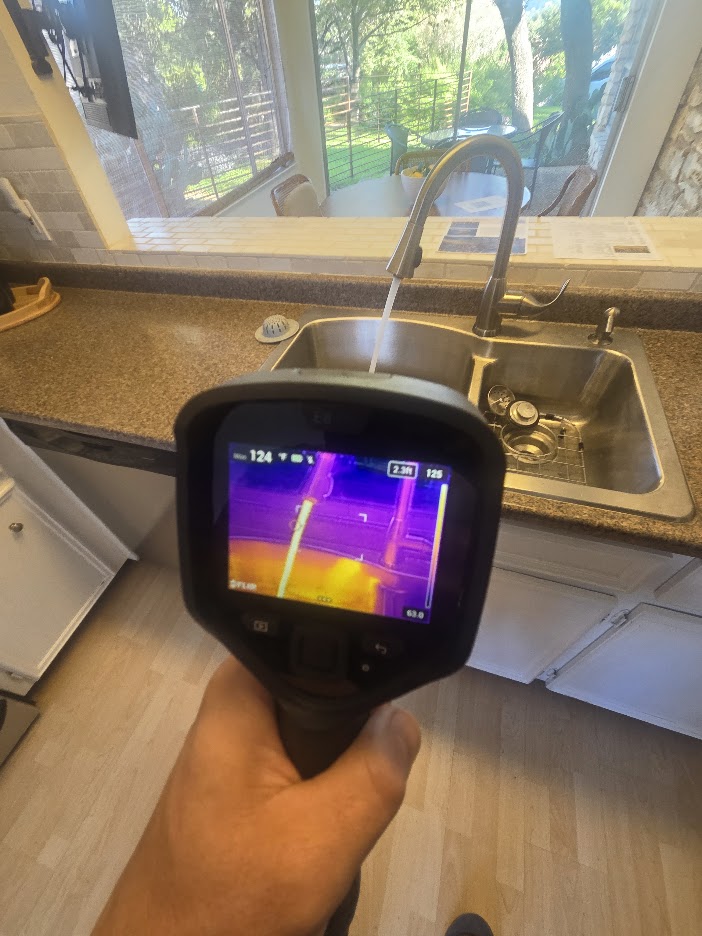
Reveal the water-temperature observation
What the photo shows: I am measuring water temperature at the kitchen faucet with a thermal camera.
What this documents: A water-temperature check during the plumbing inspection. This image is an example of the inspection process, rather than a documented defect.
03 · Inside the sewer line
What is inside this pipe?
Reveal the sewer-camera observation
What the photo shows: Roots extend into the sewer pipe. This camera view documents a condition that an ordinary visual home inspection cannot see.
Why it matters: Root intrusion can restrict drainage. Running a faucet alone does not reveal the inside of the buried line.
The next step: Use the recorded findings to discuss evaluation and repair options with a qualified plumber. Our sewer scopes include narrated video and defect timestamps.
Book your home inspection.
Schedule online, or call/text (737) 259-4413 with questions about the property.
Monday–Saturday · Same-day reports · View pricing