home-inspector in Cedar Park Texas

When buying a home in Cedar Park, a home inspection should give you a clear understanding of what actually matters before you move forward, not just a long list of minor or cosmetic items. 

A Cedar Park home inspection should focus on safety concerns, major system defects, and conditions that can impact repairs, negotiations, and long-term ownership.

Homes in the area vary widely depending on age, builder, and upkeep, so identifying meaningful issues early is key.

Local Knowledge of Cedar Park Homes

Local home inspector Eaton Bates in Cedar Park before performing a new construction home inspection

Many Cedar Park neighborhoods were built during different growth periods as the Austin metro expanded north into Williamson County.

As a result, homes in areas like Buttercup Creek, Forest Oaks, and Ranch at Cypress Creek often share common construction characteristics that inspectors pay close attention to.

Understanding these local building patterns helps identify issues related to foundation movement, roofing systems, drainage, insulation levels, and aging mechanical systems that are common in Central Texas homes.

Local Experience Inspecting Cedar Park Homes

Home inspection Cedar Park examining the home's foundation for structural issues

Austin Real Estate Inspections is locally owned and operated by Eaton Bates, a longtime Cedar Park resident who has lived in the Cedar Park area since the year 2000. 

Having grown up in the community, Eaton is familiar with many of the neighborhoods, schools, and development patterns that have shaped Cedar Park’s growth over the past several decades. That local familiarity helps provide useful context during home inspections, especially when evaluating homes built during different development periods across the area. 

Austin Real Estate Inspections is also a member of the Cedar Park Chamber of Commerce, reflecting a commitment to supporting the local business community and serving homeowners and real estate professionals throughout Cedar Park and the surrounding Williamson County area.

What a Cedar Park Home Inspection Includes

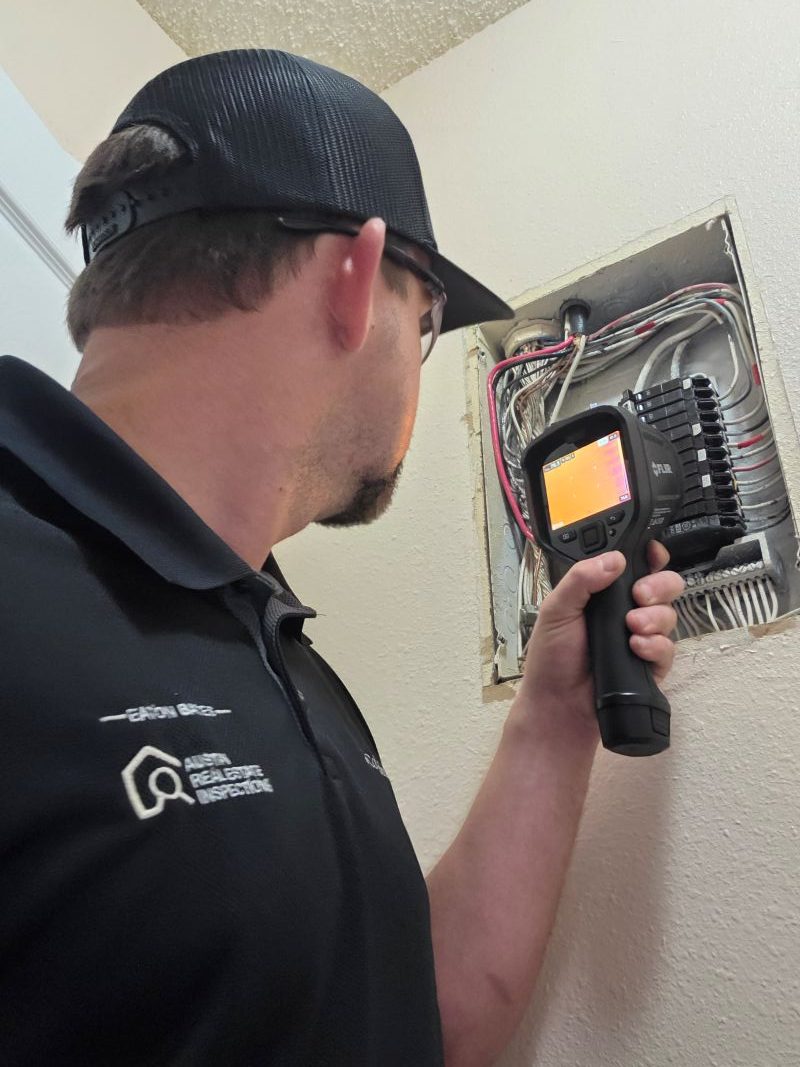
home inspector in Cedar Park, TX using a thermal imager during a home inspection

A professional home inspection in Cedar Park and the 78613 area are designed to evaluate the major systems and structural components of a home. The goal is to help buyers understand the current condition of the property and identify safety concerns, maintenance items, or potential future repairs.

A Cedar Park home inspection includes the following services:


  • Roofing systems and flashing

  • Foundation and structural components

  • Electrical panels, wiring, and outlets

  • Plumbing systems and water heaters

  • Heating and air conditioning equipment

  • Attic insulation and ventilation

  • Windows, doors, and exterior components

Cedar Park Home Construction Eras & What Inspectors Look For

Homes in Cedar Park were built across several major development periods, and each era tends to have its own patterns of maintenance concerns. 

While every home is unique, certain systems or construction practices show up more frequently depending on the decade the home was built.

Cedar Park Homes Built in the 1970s and 1980s

Cedar Park home built in the 1980s in the Cedar Park Ranchettes neighborhood

Some of Cedar Park’s earliest residential growth began in the 1970s, shortly after the city incorporated in 1973. 

During that period the population expanded rapidly as land that had previously been ranch property began transitioning into suburban housing. Between 1970 and 1980, Cedar Park’s population grew from roughly 125 residents to more than 3,000, marking the beginning of the city’s modern development. 

Homes from this era tend to have solid structural framing and larger lots, but many now contain systems that are approaching or exceeding their typical service life. 

During a Cedar Park home inspection, homes built in the 1970s and 1980s often receive careful attention in the following areas: 

Electrical Systems 

Some homes built during the late 1960s and early 1970s used aluminum branch wiring because copper prices were high. Aluminum wiring can loosen over time due to thermal expansion and contraction, potentially creating overheating risks if not properly maintained or upgraded. 

Insulation and Attic Ventilation 

Energy standards were very different in the 1970s and early 1980s. Many homes from this era were built with insulation levels that are significantly lower than modern recommendations, which can affect both comfort and HVAC efficiency. 

Plumbing Systems 

Original plumbing components may now be several decades old. Depending on the home, inspectors may look for aging galvanized steel or early copper piping as well as older drain systems that can become restricted or corroded over time. 

Electrical Capacity and Outlet Spacing

Homes built during this period were designed before the explosion of modern electronics. It is common to see fewer circuits and fewer outlets per room compared with modern construction, which can sometimes lead to overloaded circuits in updated households.  

Windows and Energy Efficiency

Many homes from this era still have original single-pane windows, which can contribute to higher heat gain during Central Texas summers. While these homes often have durable construction and mature landscaping, inspections typically focus on identifying aging systems, verifying safety upgrades, and evaluating whether key components have been updated over time.

Cedar Park Homes Built in the 1990s

Cedar Park home from the 1990s in the Carriage Hills neighborhood

The 1990s marked a major expansion period for Cedar Park as the Austin metro area continued to grow north into Williamson County. Many of the neighborhoods that define Cedar Park today were developed during this time, including large suburban subdivisions built to accommodate the rapid population growth occurring throughout Central Texas. 

Homes from the 1990s are often well-constructed and remain very desirable for buyers because they tend to offer larger floor plans and established neighborhoods. 

However, during a Cedar Park home inspection, houses built in the 1990s are now reaching an age where several original systems may require closer evaluation. 

Inspectors frequently pay particular attention to the following areas: 

Roofing Systems 

Many homes built in the 1990s have had at least one roof replacement already. Inspectors typically evaluate the age and condition of the current roof covering, flashing details, and ventilation systems that affect roof lifespan. 

Heating and Cooling Equipment 

HVAC systems installed during the original construction have usually been replaced at least once by now. Inspectors often look for aging equipment, airflow issues, and attic duct conditions that can affect efficiency in Central Texas heat. 

Exterior Siding and Trim

Some homes built during the 1990s used engineered wood siding products that can be susceptible to moisture damage if not properly maintained. Inspectors check siding conditions, caulking, and flashing details to help identify areas where moisture intrusion could occur. 

Deck and Balcony Attachments

Deck construction practices in the 1990s sometimes lacked the metal flashing and ledger attachment methods commonly recommended today. Inspectors evaluate deck attachments and structural connections for safety and durability. 

Attic Ventilation

Proper attic airflow plays a major role in roof longevity and energy efficiency. Inspectors often examine soffit vents, ridge vents, and insulation levels to determine whether attic ventilation is functioning as intended. 

Although many 1990s homes remain in excellent condition, inspections often focus on verifying system upgrades and identifying maintenance items that naturally arise as homes approach the 30-year mark.

Cedar Park Homes Built in the 2000s and Newer

Much of Cedar Park’s most visible growth occurred during the early 2000s and continued through the 2010s as the Austin metropolitan area expanded north. 

Large master-planned communities, new schools, and improved transportation corridors helped transform Cedar Park into one of the fastest-growing suburban areas in Central Texas. 

Homes built during this period often feature modern layouts, updated electrical systems, and improved insulation compared with earlier decades. However, even relatively newer homes benefit from a careful inspection because construction practices and site conditions can still create issues that develop over time. 

During a Cedar Park home inspection of homes built in the 2000s and newer, inspectors often evaluate areas such as: 

Drainage and Foundation Grading 

Central Texas soils can expand and contract depending on moisture conditions. Proper grading and drainage around the foundation are important to help prevent long-term structural movement. 

Roof Flashing and Penetrations 

Even newer homes sometimes develop roof leaks around flashing, vent penetrations, and chimney intersections if these areas were not installed carefully during construction. 

Attic Insulation and Ventilation Balance

While newer homes generally have better insulation standards, inspectors often verify that soffit vents, ridge vents, and insulation coverage allow the attic to ventilate properly.

HVAC Performance and Airflow 

Modern homes typically rely heavily on air-conditioning systems. Inspectors often evaluate duct installation, airflow balance, and equipment condition to ensure the system operates efficiently in the Texas climate. 

Construction Details and Finish Items

In rapidly growing areas like Cedar Park, homes were sometimes built quickly during periods of strong housing demand. Inspections frequently identify smaller construction details such as flashing gaps, improperly sealed penetrations, or minor framing adjustments that benefit from correction. 

Although homes built after 2000 often contain modern building materials and updated systems, a thorough inspection helps ensure that the home’s major components are functioning properly and that small issues are addressed before they become larger problems.

Neighborhoods We Inspect in Cedar Park

Cedar Park and the 78613 area includes a wide range of neighborhoods built across different development periods. Austin Real Estate Inspections regularly inspects homes throughout Cedar Park and nearby communities in Williamson County.

  • Buttercup Creek
  • Forest Oaks
  • Cypress Creek
  • Ranch at Brushy Creek
  • Twin Creeks
  • Silverado Ranch
  • Whitestone Oaks
  • Cedar Park Town Center
  • Anderson Mill West
  • Carriage Hills

Cedar Park Home Inspection FAQs

Home inspection faqs for Cedar Park, Texas

What are common issues found in Cedar Park homes?

Common findings during inspections may include aging HVAC systems, roof wear, drainage and grading concerns. Attic ventilation issues, or electrical updates depending on the decade the home was built.

Homes in Cedar Park were built during several major development periods. Pre-1990s, pre-2010s, and post 2010s and each has it’s own set of common issues. 

How much does a home inspection cost in Cedar Park?

The cost of a home inspection in Cedar Park typically ranges from about $350 to $675, depending on the size, age, and complexity of the home.

Larger homes, older properties, or homes with additional systems such as pools, irrigation systems, or detached structures may require more inspection time.

Visit out pricing page to get more information on costs around the Cedar Park area and feel free to call 737-259-4413 to inquire about pricing.

However, the easiest way to get pricing and availability is to schedule online.

Are foundation issues common in Cedar Park homes?

Foundation issues are not usually common in Cedar Park when compared with other parts of Central Texas.

Much of the surrounding Central Texas area sits on a stable bed of limestone but the land can also have clay-rich soils that can expand and contract as moisture levels change so foundation movement will happen under the right conditions.

Over time, these soil movements can place stress on foundations, particularly during periods of drought followed by heavy rain.

During a home inspection in Cedar Park, the structure is evaluated for signs of movement such as cracking in masonry or drywall, doors and windows that do not align properly, or uneven floors.

While many homes perform well for decades, identifying early indicators of movement can help buyers better understand the home’s condition and maintenance needs.

Do home inspectors check for termites in Cedar Park?

Home inspectors in Cedar Park regularly check for Termites and other wood-destroying insects because they are present throughout Central Texas, including Cedar Park and the surrounding Williamson County area.

While a standard home inspection may note visible signs of wood damage or conditions that could contribute to insect activity, a dedicated WDI (Wood Destroying Insect) inspection is typically performed by a licensed pest control professional.

This inspection specifically evaluates the property for evidence of termite activity, wood damage, and conditions that may increase the likelihood of infestation.