
Do I need a sewer scope if the drains work fine?
The sinks drain. The toilets flush. That is useful information. But it does not tell you everything about the pipe underground.
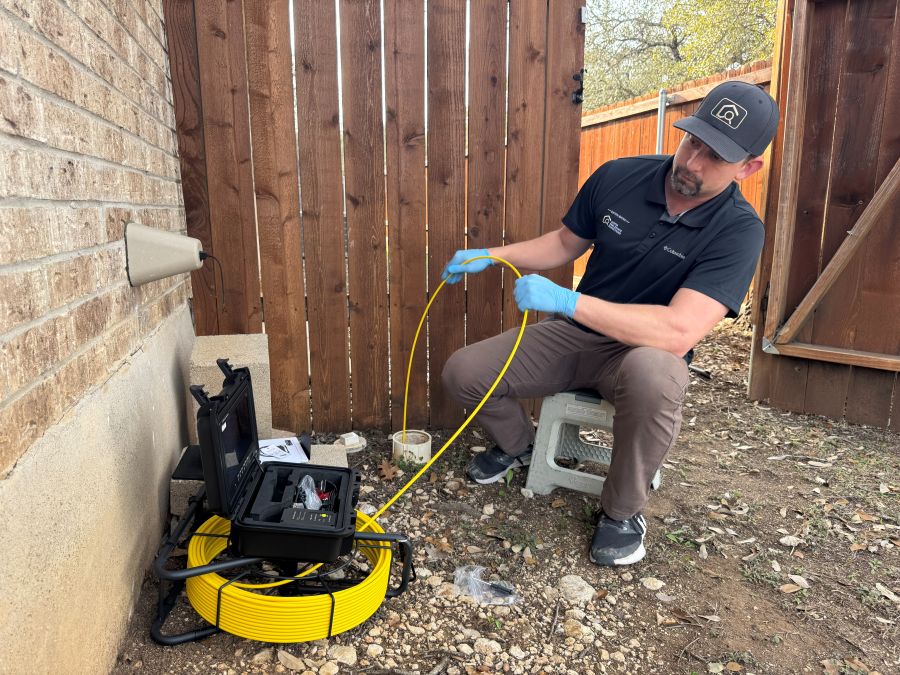
Yes, a sewer scope can be worthwhile even when the drains work normally. A drainage check shows how the fixtures perform during the test. A camera inspection helps reveal the condition of the accessible sewer line. Those are related questions, but they are not the same question.
Everything drained. The pipe still had a serious problem.
At a recent Austin inspection, I ran multiple fixtures at the same time in each bathroom: two sinks, a shower and a tub, while also flushing the toilet. I let the water run for more than five minutes. The sinks drained, the toilets flushed, and I did not observe a backup.
Later, the sewer camera showed something very different: a substantial separation between pipe sections, with a muddy opening at the gap. I documented the condition in the sewer report as a significant offset and recommended a licensed plumber’s evaluation.
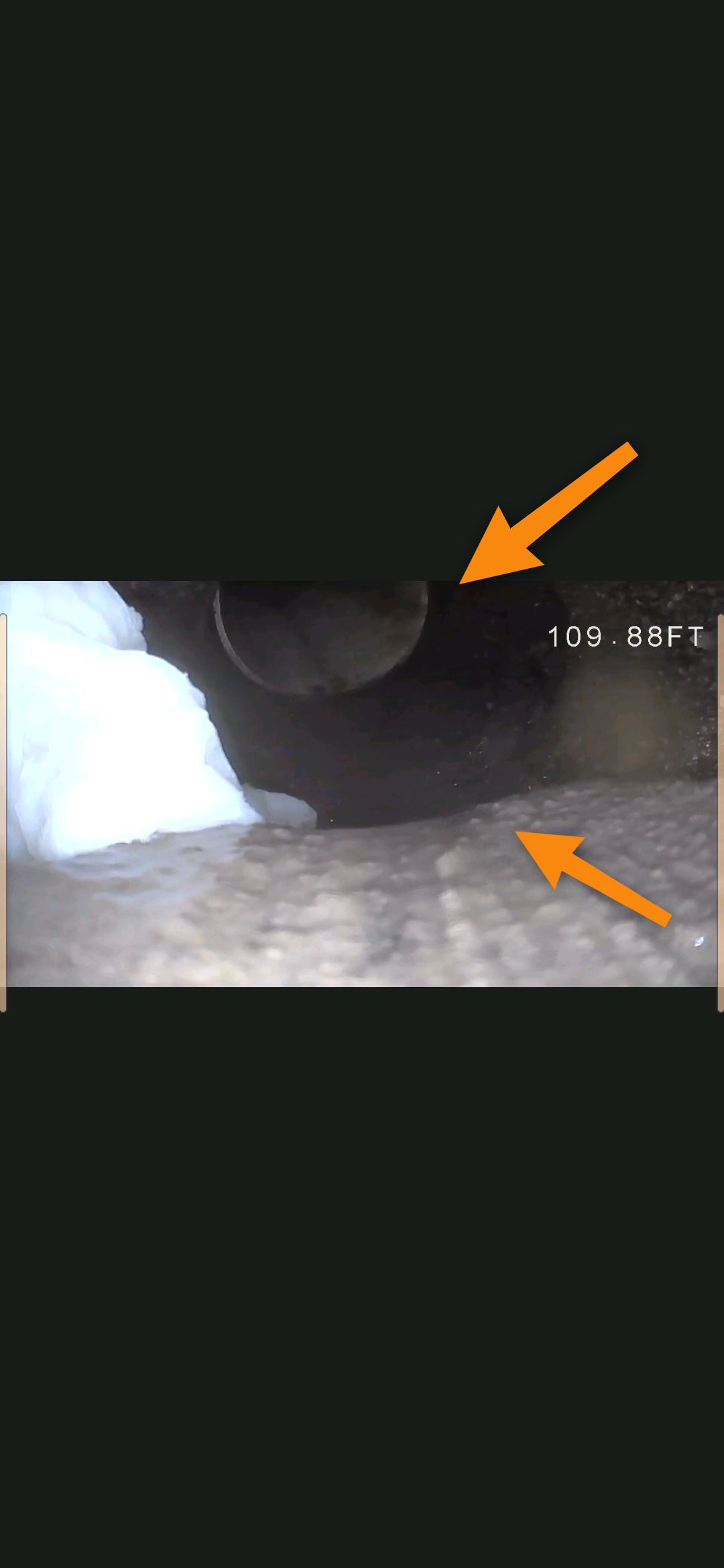 From an Austin inspection
My impression was that wastewater was entering that opening and continuing toward the downstream pipe. That raised concern about soil washing away around the separation. The camera view did not establish the full extent of any surrounding void or how quickly the condition might worsen.
“The water went down” and “the pipe is intact” are two different conclusions.
That distinction matters when you are buying a home. You do not need to assume every working drain hides a problem. You do need to understand what a normal drainage test leaves unanswered.
Why a damaged line may still drain
Think about the path the water takes. If there is still room to pass, water may continue moving even though part of the line is obstructed or damaged. A developing problem does not have to stop the flow completely before it deserves attention.
A path for water is not proof of a clear pipe
Conceptual side view, not to scale. This explains partial obstruction; it does not reconstruct the Austin pipe separation.
Running fixtures is still valuable. It can reveal slow drainage, backups and other problems that occur during testing. The mistake is treating the absence of those symptoms as proof of the condition of every buried section.
A sewer camera adds a different view. It can show visible conditions such as a separated joint, roots, deterioration or standing water in the portions it reaches. It does not establish that every concealed part of the system is sound.
How I help buyers decide whether to add a scope
I look at the particular house, what we know about its sewer line, and the buyer’s situation. A first-time buyer with little room for an unexpected repair may weigh that uncertainty differently from an experienced investor. Neither should have to make the decision based only on whether a toilet flushes.
Four things that change the conversation
Older or unknown piping moves the scope higher on my list. The home’s age alone does not tell us which material is underground.
Mature trees near a known or suspected route are worth considering. A nearby tree does not prove roots are inside the pipe.
Recurring backups, slow drainage or prior sewer work deserve closer attention and useful documentation.
Consider how an unplanned repair would affect your budget and how much information you want before buying.
These are reasons to investigate, not a score that diagnoses the line or guarantees a safe skip.
If you are considering an older property, the sewer line is one part of a larger picture. My guide to buying an older home in Austin covers the broader questions to bring to your inspection.
What if the house is brand new?
A new home changes the risk profile. I am less concerned about decades of wear, but I still want to know whether the line was installed properly and remained intact through construction.
People make mistakes, and construction involves equipment moving around the property. New piping is not an automatic reason to skip the camera. For me, an older house with large trees often raises the priority further, but “new” is not the same as “verified.”
Look beyond the age of the pipe
Conceptual checks, not to scale. These are possible conditions to look for, not findings at a particular new home.
If the camera finds a concern, what happens next?
A finding is a reason to get better information. It does not automatically tell you to walk away from the house, replace the entire line, or assume a particular repair cost.
- Understand what was actually seen. Ask for the images, video and written explanation. Separate the observed condition from a possible cause.
- Understand what could not be inspected. If the camera could not pass an obstruction, the condition beyond it remains unknown.
- Get the appropriate follow-up. A licensed plumber can evaluate a significant concern, verify the location as needed, and advise on repair options and estimates.
- Use that information before making your decision. Consider it alongside the rest of the inspection and your available budget.
I do not sell sewer repairs, and I do not benefit financially from whether you buy the house. My role is to help you understand the finding and the next useful step.
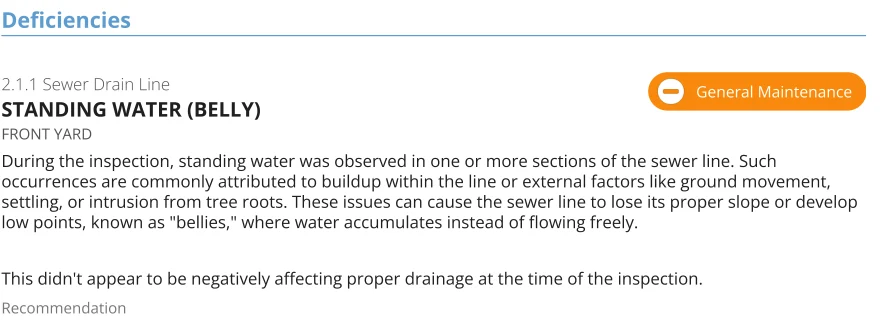
What a sewer scope cannot promise
A camera inspection is limited to the accessible interior it can view. Access, bends, obstructions and standing water can limit what is seen or how far the camera travels. A scope is not a pressure test, a comprehensive leak test or a guarantee against future trouble.
The report should make the inspected areas and limitations clear. A reassuring result is useful, but it should never be stretched into a promise about portions that were not inspected.
Three questions to ask before the inspection
- Do we know the sewer line’s material, age or repair history?
- What portion can be scoped, and how will any limitations be documented?
- If the camera finds a concern, will I have photos, video and a written explanation to share with a plumber?
You do not need to become a plumbing expert to make a sound decision. You need to know what has been checked, what remains uncertain and which next step will help you most.
Considering a home around Austin?
Tell me about the property and the questions you have. We can discuss whether a sewer scope fits the inspection you need. If you’re weighing several options, compare the sewer scope with other home inspection add-ons.
See sewer-scope details and pricing →Further reading: InterNACHI’s sewer-scope inspection standards explain the visual nature of the inspection and its limitations.