
A clearer decision before you buy
The seller gave me an inspection report.
Do I still need my own?
Before you decide that the house has already been inspected, look at what the report actually answers and what it leaves open.
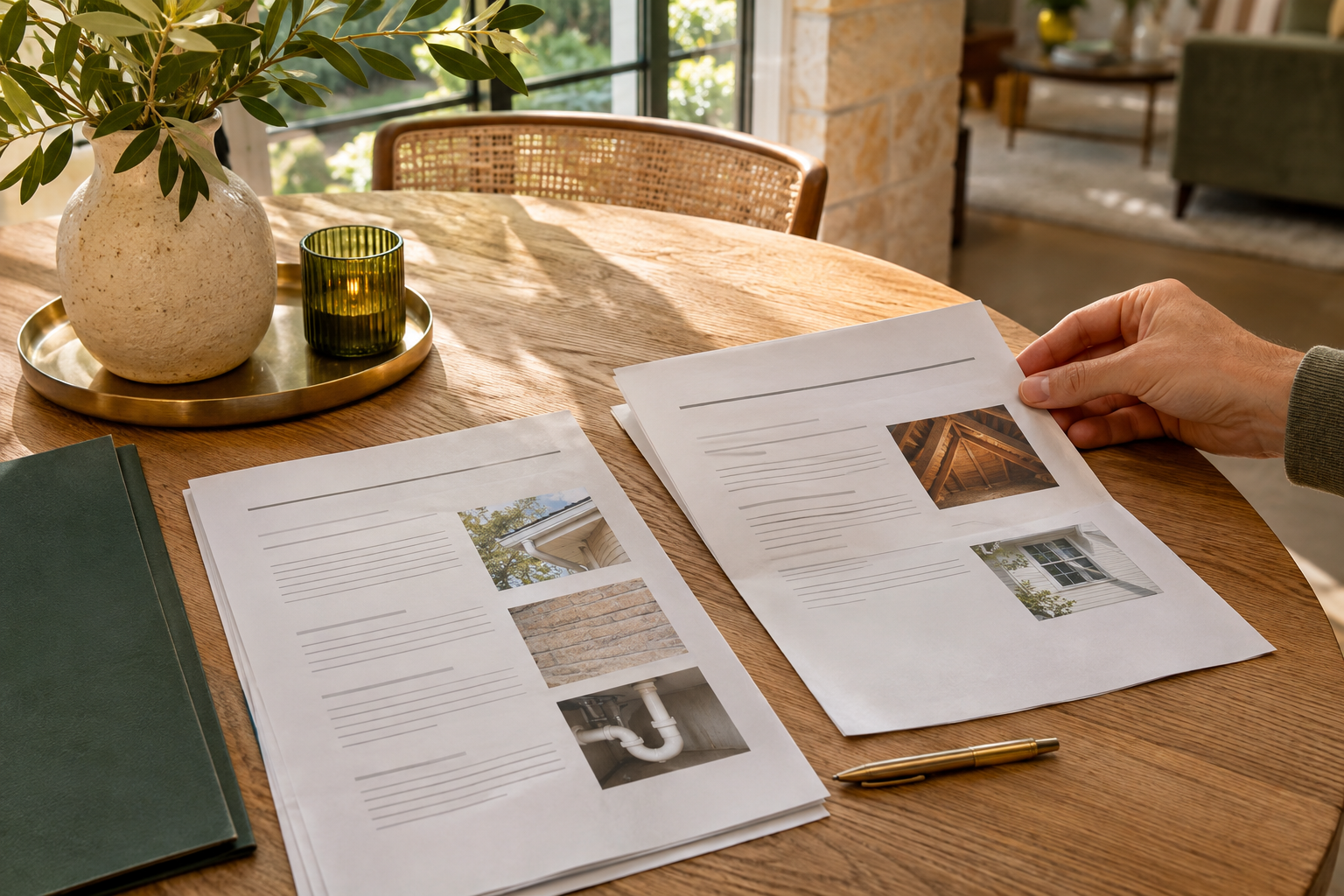
Use the seller’s report as a starting point, then identify what remains unanswered.
My recommendation is to share it with the inspector you hire. It can provide valuable background without replacing a current inspection prepared for you.
Where did this report come from?
Was it a pre-listing inspection the seller ordered, or an inspection from a previous buyer? Ask for the inspection date and the complete report, including photographs, limitations and separate attachments.
A report from a previous buyer is not, by itself, proof that the house has a major problem or that the inspection ended the sale. Ask what is known rather than guessing why that transaction did not close.
A seller-ordered report can also be useful. Who ordered it does not establish whether its findings are accurate or whether the information is sufficient for your purchase.
Three records. Three different questions.
An earlier finding, a repair invoice and a current inspection can all be useful. Each tells you something different.
What was observed then
A dated record of findings, scope and limitations at that visit.
What happened afterward
Invoices, photos and specialist findings that explain the response.
What is observed now
Current accessible conditions, with today’s limitations documented.
A repair record does not, by itself, certify a repair or establish current condition.
Read the unanswered questions, not just the summary.
Before deciding that another inspection would repeat the same work, check these five things:
A summary saying “no major concerns”
Read the complete report. What limitations and recommendations are outside that summary?
An item marked not inspected
Why was it not inspected? Has the access or operating condition changed?
A recommendation for further evaluation
Was that evaluation completed? Ask for the actual findings, not just a statement that someone looked at it.
A list of completed repairs
Match each repair to the original finding and available invoices, photos or specialist documentation.
A report described as recent
What repairs, leaks, remodeling or other changes occurred after the inspection date?
These questions help identify what remains unresolved. They do not establish that the earlier inspection was inadequate.
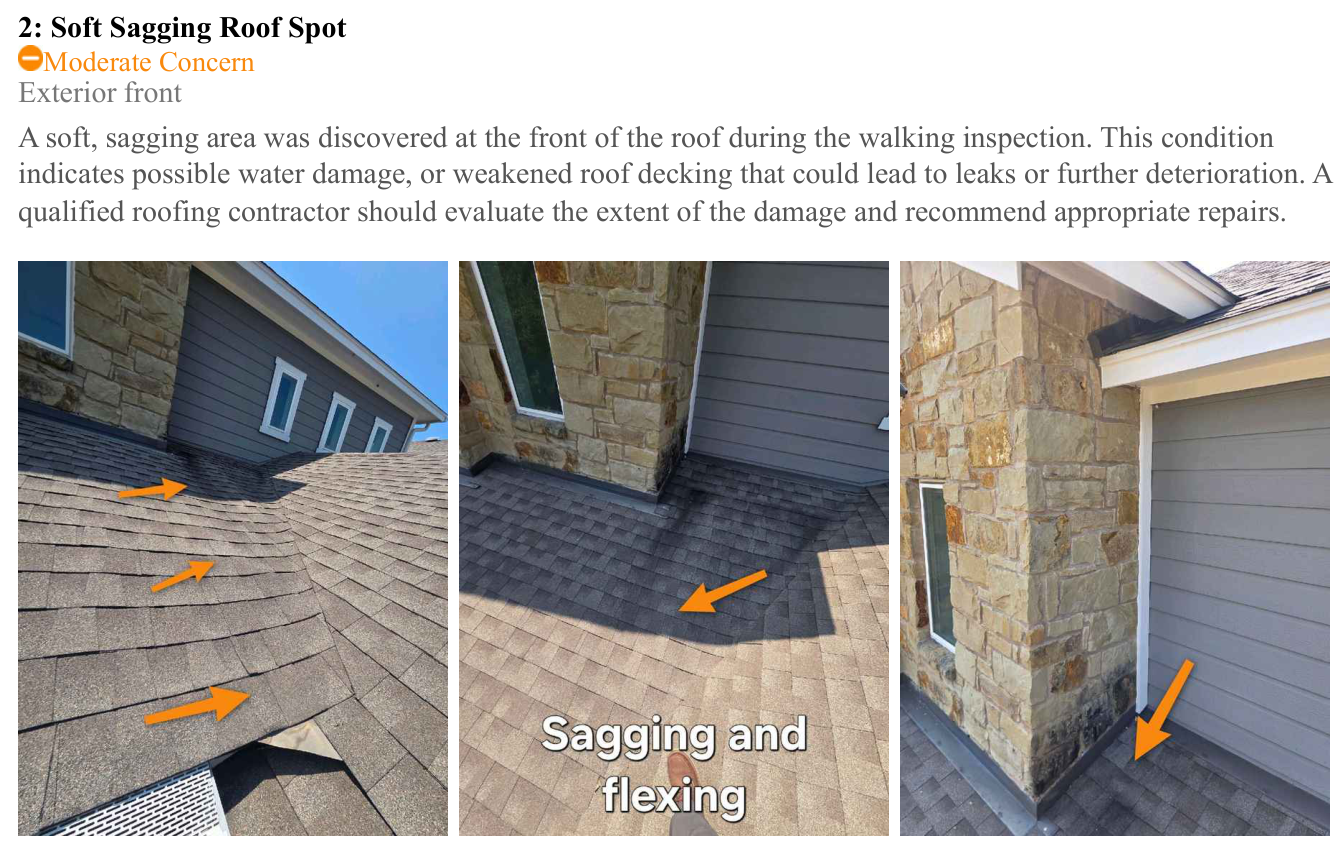
“Everything was fixed” needs an item-by-item explanation.
Keep the earlier report and the repair records together. For each concern, ask what was observed, what work was completed, and what evidence explains the result.
An invoice documents work. It may not answer every question in the original finding.
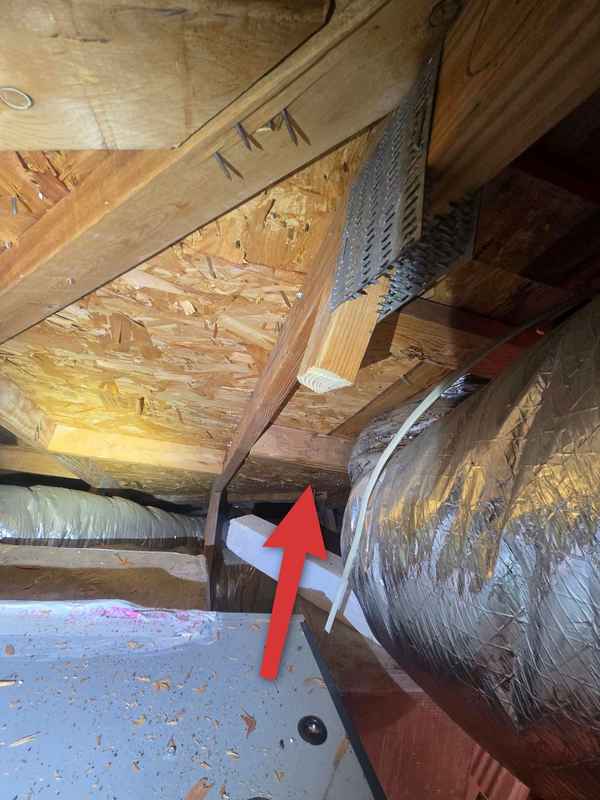
Follow the observation through to the repair records.
If a report identifies an altered roof truss, a statement that it was repaired is less informative than the available engineer’s repair design and records of the completed work.
Share those records with your inspector. A visual inspection does not certify concealed repairs or replace an engineer’s evaluation.
Read the inspection example →What if the report is only a few weeks old?
It gives you a more recent reference point. It still matters what was inspected, what could not be inspected, and whether the house or access conditions have changed.
A recent date does not fill an access gap.
Consider a report that says attic access was blocked. Moving the belongings changes access; it does not tell you the attic’s condition.
Access was blocked.
The report should explain what could not be inspected and why.
Access can be arranged.
The accessible area can now be evaluated. Its condition remains to be checked.
The useful question: Has this limitation been resolved, and has the area actually been inspected?
An older report may contain detailed photographs of a concern that has since been repaired. A recent report may leave an area unexamined. The date is useful context; it is not the whole decision.
What I would want you to send me.
- The complete previous report, rather than only its summary.
- Available repair invoices, photographs and specialist reports.
- The findings you want explained and your inspection deadline.
I can consider that history during your inspection and discuss the accessible conditions I observe. I would not promise to find every issue the previous report missed, prove every repair was completed correctly, or reproduce every earlier finding.
Texas REALTORS® likewise cautions buyers against relying on previous reports as a statement of current condition and suggests employing an inspector of their choice. Read its guidance on prior inspection reports.
Have a seller-provided report?
Text the property address and your inspection deadline. Mention the earlier report and any repair documentation. I personally perform home inspections around Austin, Cedar Park and Leander.